litbuyacbuy Wide Feet Shoe Sizing Guide
litbuyacbuy Wide Feet Shoe Sizing Guide
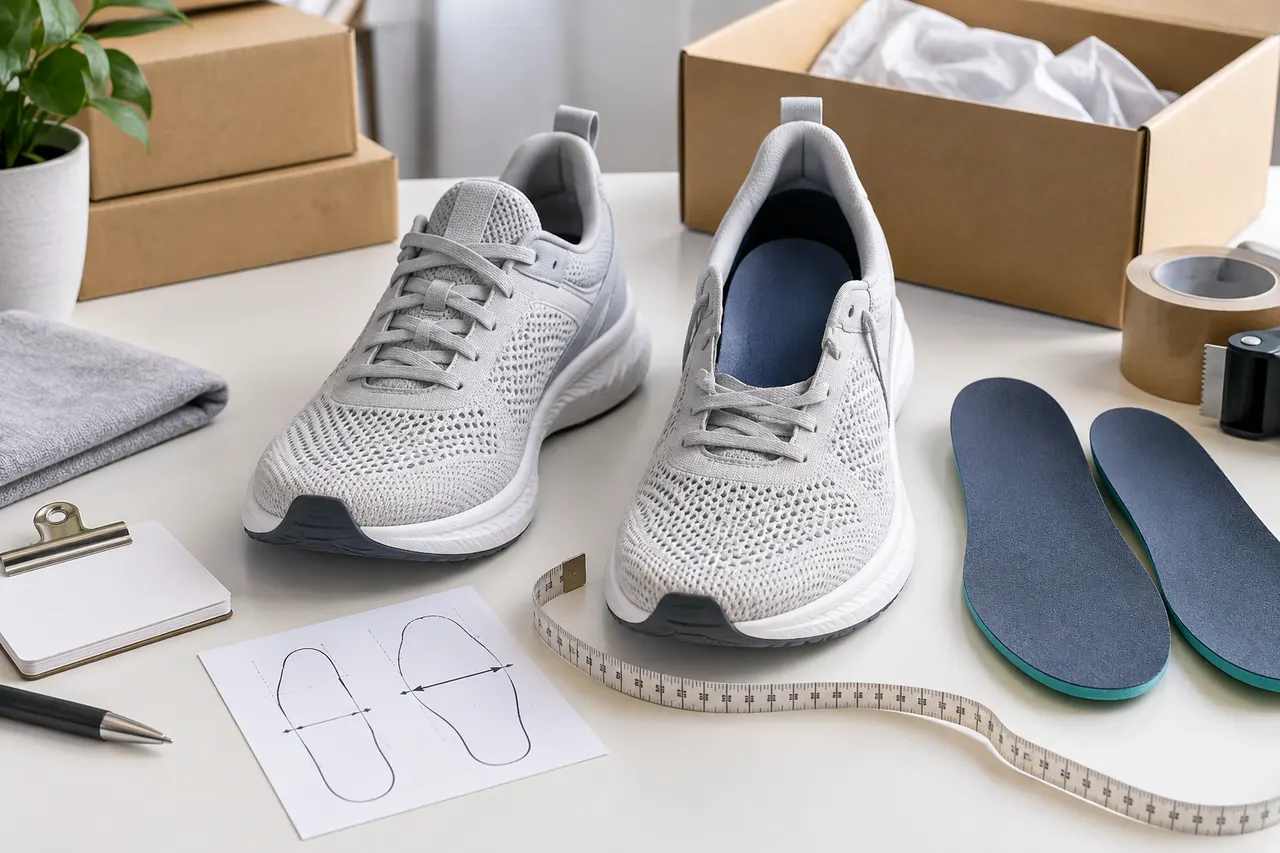
Caption: When wide feet users select shoes on litbuyacbuy, the key is not just looking at the size number, but also checking foot width, toe box shape, upper room, and the actual proportions in QC pictures.
The biggest pitfall for wide feet buying shoes is treating "usually wear size 42" as the only criterion. When purchasing Chinese products cross-platform, the size on the product page, seller's marking, brand fit, shoe last width, and warehouse QC pictures may all affect the final fit. This article is suitable for buyers who are already preparing to filter shoe styles on litbuyacbuy but are worried about squeezing the forefoot, pressure on the instep, or inconsistent left and right shoe shapes.
This article is not suitable for judging medical foot problems, nor can it guarantee the comfort of a particular pair of shoes after wearing. The softness or hardness of the upper, arch support, fatigue from long walks, and personal foot sensitivity still need to be judged by buyers based on their own wearing experience. Time-sensitive information such as platform product pages, sizes, inventory, prices, logistics, and after-sales mentioned in the article should be re-verified based on the pages and order process visible on the day of 2026-09-09 before publishing.
First confirm your own foot width, instep, and daily wearing scenarios
Choosing shoes for wide feet starts with your own feet, not from product images. It is recommended to measure in the evening or after standing for a long time, because the feet are usually closer to the swollen state of daily wear at this time. Prepare a piece of paper, a pen, and a soft ruler, step naturally on the paper, mark the distance from the longest toe to the heel, then measure the widest part of the forefoot.
Need to record three pieces of information:
Foot length: from heel to longest toe, in centimeters.
Forefoot width: usually between the base of the big toe and the base of the little toe, in centimeters.
Instep condition: whether low-top shoes often press the instep, and whether laces must be loosened when wearing laced models.
If the two feet are different sizes, choose shoes according to the larger foot. Wide feet users especially should avoid only using foot length to determine size, because sufficient shoe length does not mean sufficient forefoot width.👟
Also write down the usage scenario clearly. Commuting, long walks, fitness training, short photo shoots, and indoor wear have completely different size tolerances. For shoes that require long walking, forefoot space and toe wiggle room are more important; for shoes worn only for short periods, slightly higher risk can be accepted, but it is still not recommended to choose obviously pointed and narrow toe boxes.
Filter candidate shoe styles on litbuyacbuy that may suit wide feet
When looking for shoes on litbuyacbuy, do not rush to order in the first round. First divide candidate shoe styles into three categories: "possibly suitable for wide feet", "need caution", and "high risk". This action can reduce the probability of repeated size changes, returns or exchanges, or abandoned orders later.
Prioritize keeping these candidates:
Product images show a round, square, or clearly wide forefoot outline.
Lace area is long and adjustable space is obvious.
Upper has some elasticity or adjustable structure, but do not treat elasticity as guaranteed comfort.
Product page provides clear size chart, insole length information, or actual measurement pictures.
Reviews or seller descriptions clearly mention the fit is wide, normal, or narrow, but still need to verify source and date.
Candidates that need caution include pointed toe shoes, narrow long shoe shapes, skate shoes with very low upper coverage, sports shoes with obviously inward curving outer forefoot, and products that only give EU or Chinese sizes without insole length descriptions.
High-risk candidates usually have three signals: too few product image angles, missing size chart, and blurry toe box and upper details. If a shoe style cannot even show its basic shape clearly, it is not suitable to bear the trial-and-error cost for wide feet.
Check toe box shape, upper room, and lace area friendliness
Wide feet should first look at the toe box. Toe box shape determines whether toes and forefoot can spread naturally. Round and slightly square toes are usually more friendly than pointed toes, but cannot be judged by just one front view. It is best to look at top view, side view, and angled view at the same time.
You can quickly judge risk according to the following table:
Observation position | More friendly signals for wide feet | Signals to avoid |
|---|---|---|
Toe box | Rounded, square, obvious forefoot flare | Pointed narrow, forefoot quickly narrows |
Upper | Laces or Velcro adjustable, upper not obviously low | One-piece hard upper, low instep area |
Shoe body | Natural transition from forefoot to midfoot | Midfoot sharply narrows, outer line curves inward |
Collar | Some opening and adjustment space | Collar very tight, wearing relies on squeezing |
The lace area is crucial for high instep buyers. Shoes with many eyelets, adjustable tongue, and longer opening are usually easier to leave room for the instep. Conversely, styles with very short tongue or one-piece wrap upper may press on the instep even if the forefoot width seems enough.
Also pay attention to material boundaries. Images can help you judge upper structure, but cannot reliably judge actual softness or hardness. Synthetic leather that looks soft may be hard on foot, and thick-looking fabric may not have significant stretch. Do not write visual impressions as tactile conclusions.
Use size chart to verify foot length, insole length, and brand marking differences
The size chart is the second filter for wide feet shoe buying. The correct approach is not to directly find your usual size, but to consider foot length, reserved space, and shoe inner length together.
In general, there should be activity space between foot length and shoe inner length. Wide feet users who easily feel pressure, tightness, or rubbing on the little toe should generally not choose an inner length exactly equal to foot length. A safer approach is to first filter by foot length plus reasonable allowance, then combine with toe box shape to judge whether to go up half a size or a full size.
Check in this order:
Find whether the product page has a centimeter-based size chart.
See whether the size chart indicates foot length, inner length, or sole length.
Prioritize referring to inner length or suitable foot length, do not treat outer sole length as inner foot space.
Compare with your larger foot.
If wide feet and the shoe shape is narrow, prioritize exclusion rather than blindly increasing size.
Different brands or sellers may have different markings. The same size 42 may have inconsistent inner lengths. Some products also mix EU, CN, US, or JP markings. As long as the page does not explain the conversion logic, you cannot assume it is exactly the same as your local usual size.
If the product page only gives vague advice like "recommend ordering one size larger", still go back to inner length and shoe shape. For wide feet, simply increasing size increases the risk of loose heel, overly long shoe body, and unstable walking.📏
In QC pictures, focus on checking left-right shoe shape and forefoot space
After ordering, warehouse QC pictures are an important point for wide feet users to confirm risks. QC cannot replace trying on, but can help you find obvious fit, workmanship, and left-right differences. After receiving QC, do not just look at color and logo; you should zoom in to check toe box, forefoot, upper, and left-right symmetry.
Recommended check order:
Top view: whether left and right toe box widths are consistent, whether one side of the forefoot outer edge obviously curves inward.
Front view: whether toe box height is obviously too low, whether upper has collapse or asymmetry.
Side view: whether shoe body is too long and narrow, whether instep area is pressed very low.
Sole view: whether outer sole forefoot width matches the shoe body outline.
Size label: whether sizes on shoebox, tongue, insole, or hangtag are consistent.
If QC pictures do not have a top-down angle, consider requesting clearer toe box and forefoot photos. What wide feet buyers need most is not more decorative details, but angles that can judge space.
Be especially vigilant for left-right inconsistency. For example, one toe box is more pointed, one forefoot is wider, or upper heights are obviously different. Such problems will not automatically disappear by choosing the right size; they may cause one foot comfortable and the other squeezed.
Evidence boundary: which comfort aspects cannot be judged by pictures alone
QC pictures can filter out some obvious risks, but cannot prove shoes are comfortable. Wide feet buyers must accept a fact: remote purchasing can only reduce risk, not completely replicate the try-on experience.
Pictures cannot reliably judge these problems:
Actual softness or hardness of the upper and pressure feeling after long bending.
Whether insole support suits your arch.
Whether the forefoot swells to the sides and rubs while walking.
Whether the heel rubs or slips.
Whether inner seams, glue edges, or hard pieces press on the foot.
Therefore, wide feet users should not treat "pictures look wide" as final evidence. A more reliable judgment is when product page size chart, shoe shape images, seller description, QC pictures, and personal historical sizes all support the same conclusion. If two or more of these conflict, lower the priority.
Also read after-sales terms in advance. In cross-border purchases, returns, exchanges, additional payment, cancellation, warehouse processing, and international shipping may all incur time or cost. Before ordering, verify the current visible order, warehouse, logistics, and after-sales instructions on litbuyacbuy, do not handle size doubts after the package is shipped.⚠️
Pre-order wide feet checklist
Before ordering, score each candidate shoe item by item. Keep only the one with the most complete evidence and lowest risk, rather than buying multiple pairs and hoping luck will filter.
Check item | Pass standard | If not pass |
|---|---|---|
Your foot length and width recorded | Have cm data, judged by larger foot | Measure first, do not order directly |
Product page size chart clear | Can distinguish foot length, inner length, or suitable foot length | Ask or change candidate |
Toe box suitable for wide feet | Round, square, or forefoot not obviously narrow | Lower priority |
Instep space adjustable | Laces, tongue, or opening has adjustment room | High instep users be cautious |
QC angles sufficient | Can see top, side, size label | Request key angle photos |
After-sales boundary confirmed | Know cancellation, return/exchange, additional photo conditions | Hold off ordering |
If you can only confirm the size number but not inner length and shoe shape, this shoe is still not stable enough for wide feet. The goal of choosing shoes for wide feet is not to find the "most popular-looking" style, but to find the style with the most complete evidence and lowest failure cost.
Also consider shipping and consolidation risks together. Shoe boxes increase volume; consolidation may reduce repeated operation costs, but may also increase volumetric weight, parcel value, and single loss risk. Whether to keep shoe boxes or consolidate with other items should be judged based on current route fees, parcel volume, and destination country customs requirements, no universal answer can be given.📦
Final action: keep one wide-foot candidate with lowest risk
Wide feet users buying shoes on litbuyacbuy should ultimately make a clear decision: keep the pair with the most complete evidence and give up candidates lacking evidence. The ideal candidate should simultaneously meet four points: size chart understandable, toe box shape forgiving, instep area adjustable, QC pictures supporting consistent left-right shoe shape.
If two pairs are similar in price, prioritize the one with clearer size evidence, not the more attractive appearance. If a pair must be "bought much larger" to possibly solve width issues, it is usually not a wide-foot-friendly choice, because it may bring excess shoe length, unstable heel, and walking fatigue.
The executable ordering process is:
Measure your foot length, forefoot width, and instep condition.
On litbuyacbuy, first filter by toe box and upper structure.
Use product page size chart to verify centimeter data.
After ordering, view QC pictures, focusing on toe box, forefoot, and left-right consistency.
When key angles are missing, request additional photos, do not confirm based on blurry images.
Complete size and after-sales boundary judgment before shipping.
The main benefit of doing this is to reduce losses caused by forefoot squeezing, instep pressure, or misreading size markings. The added cost is that you need to spend more time measuring, screenshotting, and checking QC. Those most suited to this method are wide feet, high instep, different foot sizes, or buyers who often have shoes pressing the little toe.
The situations not recommended for this method are also clear: if the product page has no valid size information, QC cannot show shoe shape clearly, after-sales rules are unclear, or you need absolute certainty of try-on comfort, then this type of remote purchase itself is not suitable for high expectations. The safest strategy for wide feet buying shoes is not pursuing zero risk, but checking all verifiable evidence before payment, warehousing, and shipping.✅
Agent platform shopping FAQ
1. What types of products are available on litbuyacbuy.net?
On litbuyacbuy.net, you can find a wide variety of products, including shoes, T-shirts, sweaters, hoodies, jeans, sweatpants, shorts, beach pants, factory clearance items, down jackets, baseball shirts, shirts, hats, jewelry, bags, electronics, sunglasses, socks, underwear, and trendy collectibles.
2. What product types can be browsed in the spreadsheet on litbuyacbuy.net?
The spreadsheet on litbuyacbuy.net includes shoes, clothing, bags, accessories, sportswear, perfume, hats, scarves, belts, and various household items.
3. What should newcomers using the litbuyacbuy.net agent platform for the first time know?
First-time Taobao agent users accessing litbuyacbuy.net via the spreadsheet usually receive a new user shipping discount package. At the same time, you need to check the shopping step guide prepared for beginners.
Browse our latest products and find your next favorite item.